

The Empire Always Thinks It Has the Last Word
An Easter Meditation on Resurrection, Power, and the God Who Refuses to Cooperate
Contributor Mozart Dixon Jr.
Every empire operates on the same theology.
Order is sacred. Power is permanent. And the bodies of the threatening, the disruptive, the dangerous must be managed. They must be contained. And when necessary, they must be eliminated.
This is not cruelty for cruelty's sake. From the empire's perspective, it is maintenance. A ritual. A way of keeping the world exactly as it is against anyone who dares to believe it could be different.
Rome crucified Jesus inside that ritual.
The cross was not a mistake. It was not an overreaction. It was the system working exactly as designed. Jesus had spent three years announcing a different world. A world where the hungry were fed, and the powerful were scattered. Where the last were first, and the first were last. Where you could walk into the temple, the center of both religious and economic power, and flip every table in the room because the Spirit of God said so. He was a threat to the order. So the order did what orders do. It put him in the ground. And then it waited for things to return to normal.
They never did.
The Resurrection Is Not a Comfort. It Is a Confrontation.
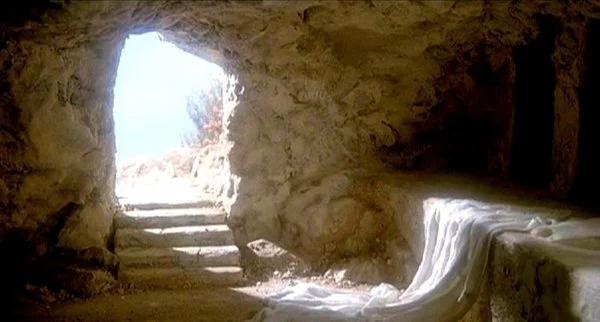
When that stone rolled away, it was not a private spiritual moment for a small circle of believers. It was a public announcement to every power that has ever held a body down: the logic of domination does not have the final word.
Not over this body. Not over anybody.
The earliest Christians said Jesus is Lord in a world where Caesar was lord. That was not a slogan. It was sedition. It was the declaration that the man Rome executed had been vindicated by a God Rome could not control. And that, therefore, everything Rome had built its authority on was a lie.
The resurrection did not invite the empire to dialogue or conversation.
It declared the empire's entire narrative to be false.
We Must Understand: God Has Always Worked This Way.
Before there was Easter Sunday, there was a remnant.
This is not a minor theme in Scripture. It is a major part of the backbone of God’s story with humans. God has a consistent, documented, stubborn pattern of preserving a people through pressure that was designed to destroy them, and then using exactly those people to carry liberation forward.
When Elijah collapsed in the wilderness, he was convinced he was the last one standing. He had seen everything he believed in dismantled. He was exhausted in that deep, soul-sick way. And God came to him, not with a strategy session, but with a correction. There are seven thousand who have not bowed. Seven thousand. The empire's pressure had been so heavy, so sustained, that Elijah could not see them. They were invisible to the dominant account of what was happening. But they were there. Alive. Faithful. Waiting.
That is the remnant.
Isaiah spoke of a remnant that returns. Micah said the remnant becomes a strong nation. Paul reaches all the way back to Elijah's story in Romans to make the same point across centuries: God has not abandoned the people. The remnant is still here.
The remnant is never the majority. It is never the powerful. It is never the group that the empire would have chosen to carry the story forward. It is always the remainder after devastation. The people the system tried to eliminate, assimilate, or simply exhaust into silence.
And then God does something with them that the empire never saw coming.
The resurrection is the fullest expression of this pattern. Jesus is the mustard seed that fell into the ground and refused to stay there. The remnant of one, raised to be the everlasting King of a new world.
A people told for centuries, by church and state alike, that their bodies were property. That their testimony was not credible. That their grief was unfounded. That their God was borrowed. That people heard the resurrection announcement differently from those who built the systems of their captivity.
They heard in it what was always there.
That God has a pattern. That the people empire buries do not stay buried. That the lynching tree was not the final word. That the plantation was not the final word. That every attempt to bury Black faith, Black leadership, Black imagination has produced a remnant that not only survived, but organized, preached, marched, wrote, and built something the empire had to reckon with.
This is not a coincidence. This is the story God continues to write.
And that grammar is what this moment demands.
The rollback of civil rights protections. The dismantling of equity work built over decades. The silence of too many pulpits about what is plain to see. This is the same story with updated language and a different letterhead. Empire continues its liturgy. And the church is being asked again, which gospel it believes.
The Easter gospel does not allow for neutrality. To worship the risen Christ while making peace with the principalities and powers that killed him is not Christianity. It is its opposite.
So here is what we have to know about this moment. And about ourselves.
We are the remnant.
Not a remnant of defeat. A remnant of divine selection. The ones who did not bow. The ones who survived the pressure to assimilate or disappear. The ones who kept the testimony alive when every institution around us tried to bury it.
Seven thousand who have not bowed.
We are still here.
And the God of Easter is not finished with us.
