

Contributor: Jemar Tisby, PhD
Courtesy of the Schomburg Center for Research in Black Culture, New York Public Library
People in the United States keep looking to 1930s Germany for clues about how to resist authoritarianism.
Meanwhile, German officials of that era looked to the United States for clues on how to structure their own authoritarian laws.
It’s a familiar instinct.
When Americans fear authoritarianism they find the nearest white/European analog and copy and paste because it is familiar.
But if your primary teachers in this moment are European history and white scholars, then you are skipping the people with vital experience resisting authoritarian power right here in the U.S.—Black people.
We must learn to see what federal, state, and local authorities have done for centuries to Black Americans is a form of authoritarianism.
When I say authoritarianism I mean: highly concentrated power, suppression of democratic processes, and the erosion of civil rights particularly through state power and terror tactics.
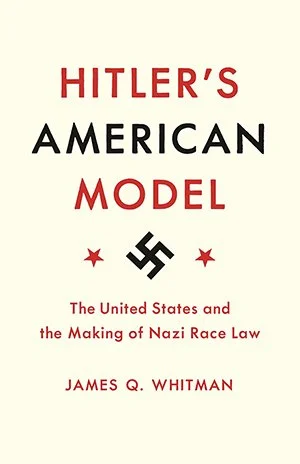
Hitler’s American Model
In his book, Hitler’s American Model, legal scholar James Q. Whitman reveals the roots of Nazi discriminatory laws.
Through careful and unsettling archival work, Whitman shows that Nazi jurists in the mid-1930s did not invent their racial regime from purely their own imaginations.
They studied the United States.
In 1934, a group of Nazi lawyers gathered to draft the Nuremberg laws—anti-semitic policies designed to control and oppress Jewish people.
And they looked to the Jim Crow laws of the United States.
What shocked them was not the cruelty of these systems, but how thoroughly they had been legalized.
“This jurisprudence would suit us perfectly,” a transcript from the meeting reads.
All the Germans had to do was substitute discrimination against Black people for discrimination against Jews.
The Nuremburg laws primarily concerned citizenship and interracial sex and reproduction.
In their pursuit of a nation run by the “pure” Aryan race, they had to ensure no other ethnic group polluted their superior genes or co-opted their government.
Thus the legal foundations of authoritarian racial governance developed in the U.S. even before Nazism.
Authoritarianism did not arrive in the United States from Europe. It was developed here, tested here, normalized here.
So if authoritarian tools have been developed and refined within U.S. systems; resisting them requires confronting our own legal and institutional histories.
Bonhoeffer’s Black Jesus
Another German of the 1930s was inspired by people in the United States in exactly the opposite direction.
Dietrich Bonhoeffer is one of the most influential Christian thinkers, pastors, and resistors of that time.
He was a leader of the Confessing Church which stood against Nazism as a matter of gospel faith and witness.
Yet even Bonhoeffer learned about resisting authoritarianism from Black people in the United States.
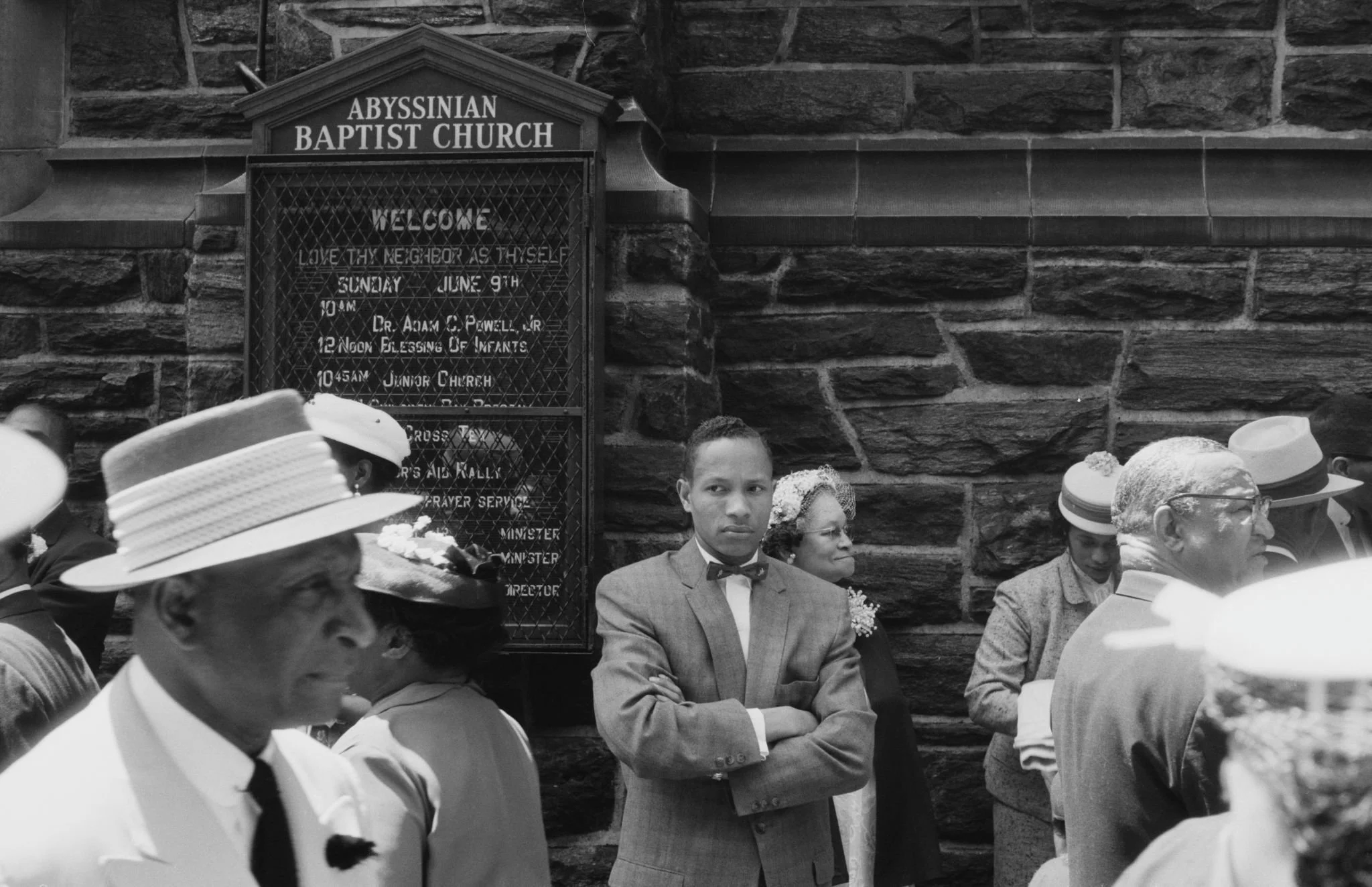
In his book Bonhoeffer’s Black Jesus, theologian and seminary professor Reggie L. Williams recounts the year Bonhoeffer spent volunteering and attending Abyssinian Baptist Church, a historic Black church in Harlem, New York.

Adam Clayton Powell, Sr., a pastor and and elected official, led the congregation. Bonhoeffer taught Sunday School there, but he learned more than he imparted.
At Abyssinian, Bonhoeffer encountered a gospel centered on social justice and solidarity with the oppressed.
He found that black Christians identified Black suffering with Jesus’ suffering.
Williams argues that this “Black Jesus” theology reframed Bonhoeffer’s understanding of Christ, embedding concrete historical solidarity with suffering people into his ethics of resistance.
This Christ-centered theology evolved into Bonhoeffer’s radical opposition to Nazi-sympathizing cheap-grace Christianity.
Bonhoeffer didn’t come to this primarily through German academic theology; rather he encountered a Jesus who stands with the oppressed in Black congregational life.
This means Christian resistance to authoritarianism does not come from abstract doctrine alone, but by proximity to oppressed communities living out the gospel under pressure.
Resistance theology must be rooted in the concrete struggle of oppressed communities not developed in the abstract in Ivory Towers and distant contexts.
Learning from Black History
Authoritarianism is not a foreign import that occasionally threatens the United States.
It is a system of power that has been built, refined, and justified on American soil—especially through laws that governed Black life.
And resistance to authoritarianism did not originate in elite European theory or abstract moral reasoning. It emerged from communities who had no choice but to learn how to survive, endure, and tell the truth under pressure.
Black Americans did not study authoritarianism from a distance. They lived under it. And in doing so, they developed spiritual, cultural, and political tools for resisting it.
This is why any serious response to authoritarian power today must reckon honestly with Black history.
Not just as inspiration or illustration but as instruction.
