

I am Free, When WE are Free
Contributor: Mozart Dixon Jr. via Substack
I’ve been sitting with a pattern lately. History has a rhythm to it, and once you hear it, you can’t unhear it.
We call it the civil rights movement. Singular. As if there was one. But look closer. The Civil War was a civil rights movement. The suffrage movement was a civil rights movement. The marches from Selma to Montgomery were a civil rights movement. Each one was a reckoning. Each one produced something. And each one produced something for a particular group, at a particular moment, while leaving others behind.
That is not an accident. That is the strategy.
The strategy for maintaining power is simple, really. Divide who gets freedom and when. Give Black men the vote on paper in the 1860s while white women can’t own property. Give white women the vote in 1920 while Jim Crow is still a functioning religion in the South. Passed the Civil Rights Act in 1964 and watched women still get denied credit cards until 1974. Keep moving the finish line. Keep splitting the coalition. Keep making people compete for scraps of dignity while the architecture of oppression stands untouched.
We are living in another one of these moments.
And if history is our teacher, here is what she is telling us: every prior movement was, in some sense, incomplete, not because the people weren’t brave, but because the liberation was partial. It landed on one group and left others exposed. The Civil War freed Black men from legal enslavement but built new chains in the form of convict leasing and Black codes. The women’s suffrage movement gained the vote but couldn’t stop a woman from being denied a mortgage by her own husband. The civil rights movement of the 1960s cracked open the law but didn’t touch the economy. The same systems simply found a new language.
We have not yet had the movement that holds all of it together.
That’s what I believe we are being called into now. Not Civil Rights 2.0. Not a remix. Something older and deeper: the unfinished business of every prior moment of liberation. The truth that we always knew but could never quite sustain long enough to build on.
We are free, when we are free together.
Not sequentially. Not in rotation. Together.
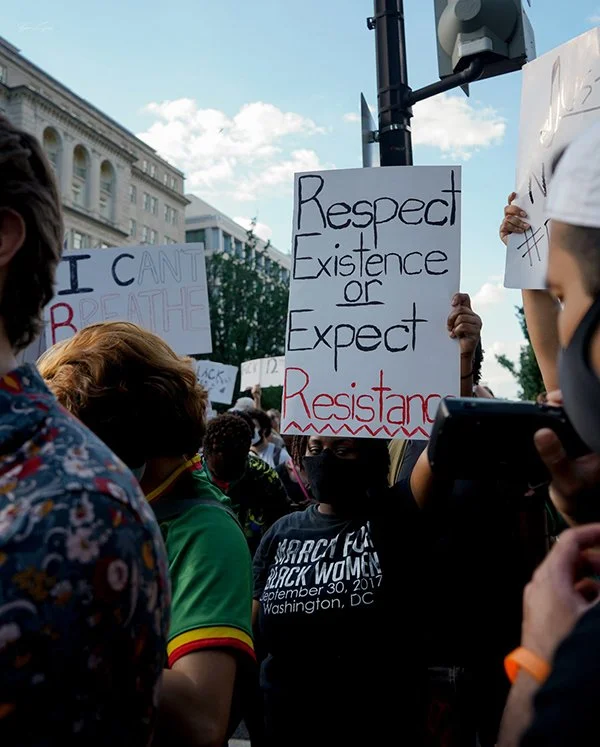
Black women are at the center of this moment. That is not a political position. That is a historical observation. Look at who showed up. Look at who organized it. Look at who has been doing the theological, intellectual, and on-the-ground labor of resistance while everyone else was still catching up. The question is whether the rest of us, men especially, will have the courage and the formation to follow that leadership rather than co-opt it.
That is what The Witness is in the business of. Not just naming white supremacy as heresy. Not just producing content about racial justice. We are forming people, theologically, historically, communally, to show up for this next iteration of the long freedom movement. People who understand that the budgets they pass are theological documents. That the churches they lead are either freedom schools or they are not. That you cannot preach the God who set the captives free and then make peace with the systems holding them captive.
This moment will not be won by louder arguments. It will be won by deeper formation. By communities that practice liberation before they declare it. By leaders who know their history well enough to refuse to repeat its fractures.
We’ve always been heading here. Now we have to go there together.
