

James Baldwin Was Right about Patriotism
Why criticizing the nation is one of the highest forms of love
Contributor: Jemar Tisby via Substack
History and literature dance in the article below. If you appreciate both, then support this kind of interdisciplinary discourse by becoming a paid subscriber today.
As we approach the annual Fourth of July celebration and the 250th anniversary of the Declaration of Independence, we should reflect on James Baldwin’s words about patriotism.
“I love America more than any other country in the world, and, for this reason, I insist on the right to criticize her perpetually.”
Baldwin shows that true love tells the truth. Love for one’s country—patriotism—is proven by the willingness to be honest about it.

Baldwin’s Autobiographical Note
For years, I had only heard this single quote, though I knew it was part of a larger written work.
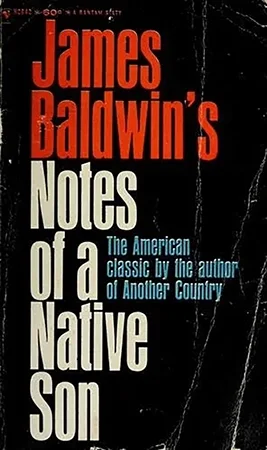
But I had to look up even what book it came from—Notes of a Native Son.
I thought it was part of an essay, but it comes from the author’s introduction of himself in a section called “Autobiographical Notes.”
The sentence is not even the subject of a full paragraph, let alone a full section.
It comes amid a laundry list of items Baldwin loves—to eat, to drink, to laugh, and to “argue with people who don’t disagree with me too profoundly.” And it’s part of a list of things he hates—bohemians, people who are too earnest, and people who make pleasure their life’s mission.
Baldwin also doesn’t like “people who like me because I’m a Negro; neither do I like people who find in the same accident grounds for contempt.”
Then Baldwin inserts his famous words about criticizing the country out of love for it.
For such a profound statement, it feels tossed like a sock without its mate into a laundry basket of unfolded clothes. It is merely one more autobiographical detail among an assortment of likes and dislikes.
But, taken with the rest of the introduction, his famous words are tied to an analysis of history and identity that sharpens the sentence’s impact.
Neither European Nor African
As a writer, James Baldwin felt compelled to write about “social affairs”—namely, what to do about the “Negro problem.”
He said he had to write about being Black in America because “it was the gate I had to unlock before I could hope to write about anything else.”
In examining his social location, Baldwin realized he was neither European nor African, and that he could not fully claim either land or culture.
Being embedded in the United States, with its white-centered norms and claims to racial superiority, Baldwin had been taught to hate and fear white people while also learning to despise Black people for not being white.
“In effect, I hated and feared the world.”
He had to work through these feelings in order to write authentically about his experience.
Looking Back to Go Forward
Part of what led to Baldwin’s literary liberation was his emphasis on learning history.
“In the context of the Negro problem, neither whites nor blacks, for excellent reasons of their own, have the faintest desire to look back; but I think the past is all that makes the present coherent, and further, that the past will remain horrible for exactly as long as we refuse to assess it honestly.”
For Baldwin, historical knowledge meant freedom and progress.
Only by taking a critical lens to the past can a person be freed from its guilt, shame, and confusion. Only when unshackled from what lies behind can one look at the present with clarity and the future with a constructive vision.
Baldwin’s emphasis on studying history helps explain why he is adamant about criticizing America.
Baldwin does not point out the racism, hypocrisy, and unfulfilled promises of the United States out of hate or bitterness. He highlights the nation’s failings because only by facing them without illusion can we learn from and transcend them
Bearing Responsibility for America
James Baldwin insists on his right to perpetually criticize the United States, a nation he loves, because he feels some responsibility for it.
He believes that love comes with the duty to care, and care often means understanding harmful patterns and ensuring they don’t continue.
This is true both on a personal level and a national scale.
“I don’t think the Negro problem in America can even be discussed coherently without bearing in mind its context; its context being the history, traditions, customs, the moral assumptions and preoccupations of the country; in short, the general social fabric. Appearances to the contrary, no one in America escapes its effects, and everyone in America bears some responsibility for it.”
Baldwin explained that we cannot accurately diagnose the ills that afflict America without understanding the circumstances that brought them about.
We have to study the nation’s social fabric—woven with threads of history, culture, values, and beliefs—if we are ever to change for the better.
Criticize the Nation Perpetually
In the context of Baldwin’s words about identity and history, his insistence on criticizing America becomes undeniably sincere.
For a writer of Baldwin’s incisiveness, unconditional candor was required.
He turned a magnifying glass on his own soul, and he turned it toward the country of his birth.
He scrutinized the past to understand it and free himself from the fear of it.
In the process, he learned to speak truly about himself and his homeland.
James Baldwin shows us that critique of nation is not hatred of nation; it is a form of love for nation.
In the final line of his autobiographical notes, Baldwin states his deepest desire.
“I want to be an honest man and a good writer.”
As we look to the Fourth of July and America 250, we should aspire to something similar: to be honest about our nation’s history and to be good neighbors in light of it.
Reflect on Baldwin’s words. What does loving your nation look like for you?
